
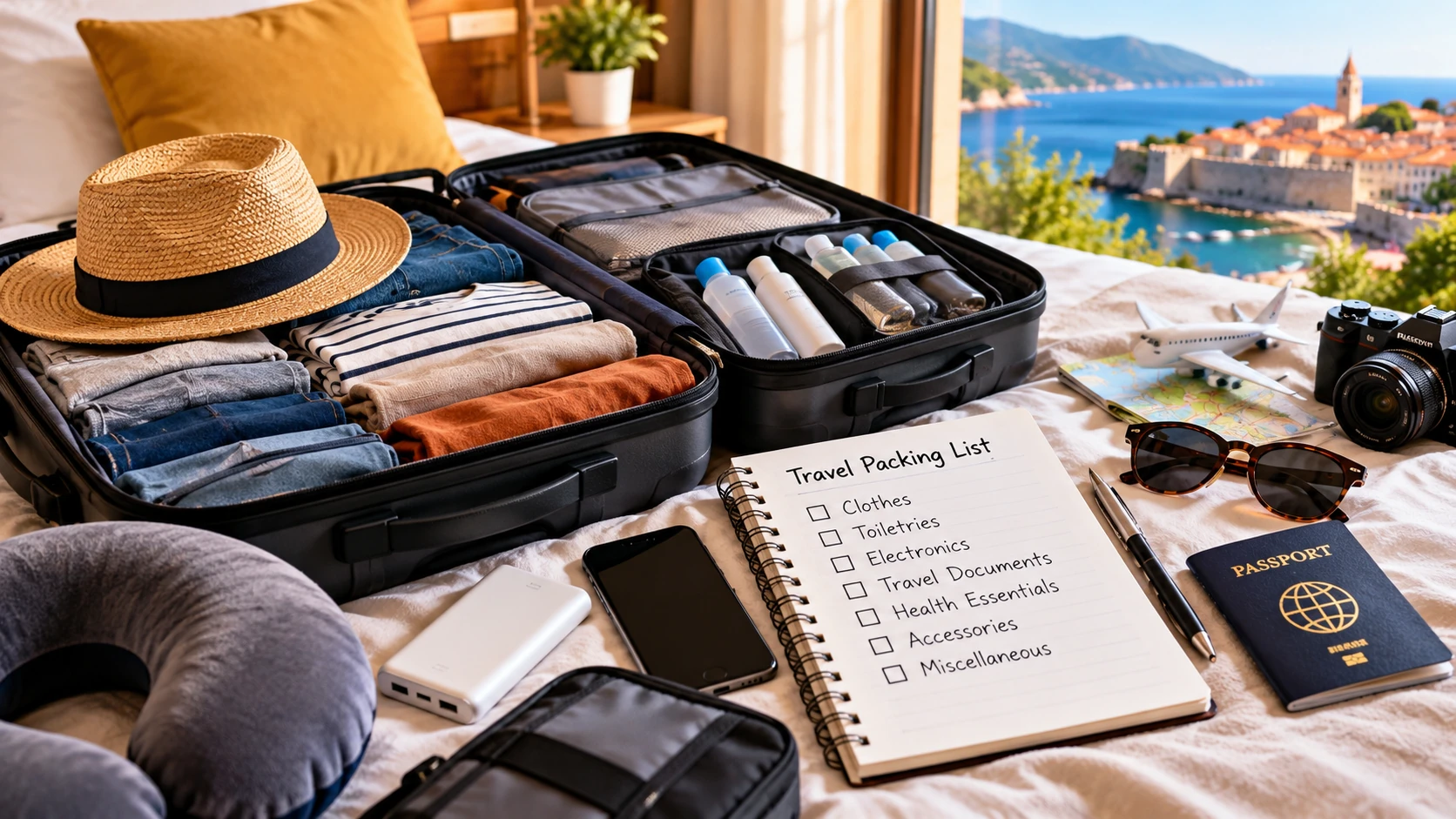
Packing can be one of the most stressful parts of preparing for a trip. Travelers often face the same questions: What should I bring? How much clothing do I need? Should I pack extra shoes? What if the weather changes?
A good packing list can reduce last-minute stress and help travelers avoid carrying unnecessary items. The key is not to pack everything that might be useful but to create a practical list based on the destination, duration, activities, weather, and available facilities.
Start With the Trip Details
Before writing a packing list, identify the basic details of the journey. Consider the destination, number of days, transportation, accommodation, expected weather, planned activities, and luggage allowance if traveling by air.
A weekend city break requires a very different packing strategy from a two-week hiking trip.
Understanding the trip first prevents unnecessary items from filling the suitcase.
Check the Weather Forecast
Weather should influence clothing choices. Look at the expected conditions shortly before departure and consider whether temperatures may change throughout the day.
For destinations with unpredictable weather, layers can be useful. A lightweight jacket, comfortable base layers, and a compact rain layer can provide flexibility without taking up excessive luggage space.
Avoid packing exclusively for one perfect-weather scenario.
Plan Outfits Instead of Packing Random Clothes
One common packing mistake is taking too many individual clothing items without considering how they work together.
Instead, create outfits before placing clothes in the suitcase. Choose versatile pieces that can be combined in different ways.
Neutral colors and adaptable clothing can make it easier to create multiple outfits from a smaller collection of items.
Consider the Length of the Trip
The number of days matters, but it does not necessarily mean you need one completely new outfit for every day.
For longer trips, travelers can consider doing laundry if facilities are available. Lightweight clothing that dries quickly can be particularly useful.
A practical approach can reduce luggage weight while still providing enough clothing for the journey.
Choose Shoes Carefully
Shoes can take up a surprising amount of space. Instead of packing many pairs, select footwear based on planned activities.
A comfortable walking pair may be essential for city travel, while hiking destinations may require specialized footwear.
If possible, choose shoes that can work with several outfits and activities.
Create a Toiletries Checklist
Toiletries should be planned separately from clothing. Depending on the destination and accommodation, you may need items such as a toothbrush, toothpaste, skincare products, hair products, medication, shaving supplies, and personal hygiene items.
Travel-size containers can help reduce space.
When staying at hotels or other accommodations that provide basic toiletries, you may be able to leave certain products at home.
Keep Important Documents Accessible
Travel documents should not be buried inside the main suitcase. Depending on the journey, these may include identification, passports, visas, tickets, booking information, insurance details, and emergency contact information.
Keep important documents in a secure and easily accessible location.
Digital copies can also provide a useful backup, provided they are stored securely.
Pack a Small Essentials Bag
A small personal bag can contain items that you may need during transportation. Depending on the trip, this could include a phone charger, power bank, headphones, wallet, medications, tissues, snacks, water bottle, and important documents.
Keeping these items together makes them easier to access without opening the main luggage.
Think About Electronics
Make a list of the electronics you genuinely need. A phone may cover many functions, while a camera, tablet, laptop, or other equipment may only be necessary for certain trips.
Remember chargers and appropriate adapters when traveling to destinations with different electrical socket types.
Cable organizers can prevent chargers and wires from becoming tangled.
Pack According to Activities
The best packing list reflects what you actually plan to do.
A beach holiday may require swimwear, sunscreen, sandals, and beach clothing. A business trip may require formal clothing and work equipment. A hiking trip may require appropriate outdoor clothing and specialized equipment.
Writing down your planned activities before packing can help identify essential items.
Keep Some Space Available
Avoid filling your suitcase before leaving. Space can be useful for souvenirs, gifts, or items purchased during the trip.
Overpacking also makes luggage heavier and more difficult to organize.
A little unused space can therefore make the return journey easier.
Use a Packing Checklist
A checklist helps prevent important items from being forgotten. Divide the list into categories such as:
- Clothing
- Footwear
- Toiletries
- Documents
- Electronics
- Medications
- Travel accessories
- Activity-specific equipment
Check each category before closing the suitcase.
Review the List Before Departure
After packing, take a final look at every item. Ask yourself whether you genuinely expect to use it.
If an item is included only because “something might happen,” consider whether it can easily be purchased at the destination if necessary.
This simple review can eliminate unnecessary weight.
Prepare for the Return Journey
Packing should not end when the trip begins. Keep track of important items during the journey, particularly documents, chargers, valuables, and medications.
A simple packing checklist can also be used when leaving hotels or vacation rentals to make sure nothing is accidentally left behind.
A Perfect Packing List Is Personal
There is no single packing list that works for every traveler. The ideal list depends on the destination, travel style, weather, activities, accommodation, and personal requirements.
Ultimately, successful packing is about preparation rather than taking as much as possible. By checking the weather, planning outfits, considering activities, organizing essentials, and reviewing the list before departure, travelers can reduce stress and make their journeys more comfortable. A thoughtful packing list allows you to focus less on your suitcase and more on enjoying the trip itself.